

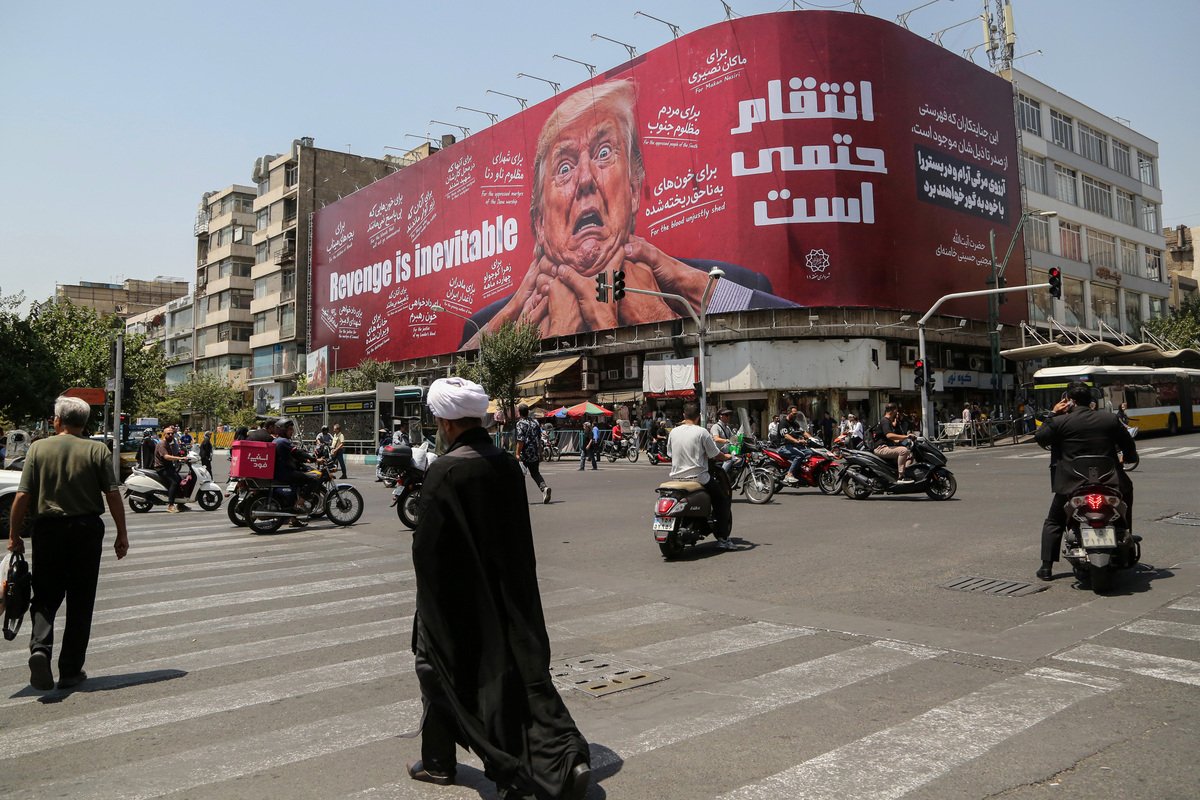
![Pedestrians walk past a giant billboard depicting U.S. President Donald Trump and the words "Revenge is inevitable" at the intersection of Jomhuri Street and Vali-e Asr Street in Tehran, Iran, on July 28, 2026. [Fatemeh Bahrami - Anadolu Agency]](https://www.middleeastmonitor.com/wp-content/uploads/2026/07/AA-20260728-42083700-42083699-GIANT_REVENGE_BILLBOARD_TARGETING_TRUMP_ERECTED_IN_CENTRAL_TEHRAN.jpg)
There are moments in international politics when a particular confrontation becomes larger than the immediate dispute that produced it. The present confrontation between Iran and the United States is one such moment. On the surface, it is about a nuclear programme, sanctions, the reopening of the Strait of Hormuz and the terms of a ceasefire that was supposed to lead to a broader peace. But beneath these issues lies a much more consequential political struggle: whether the United States can still compel a sovereign country to accept the political order Washington seeks to impose upon it, and whether a country such as Iran can resist that pressure without being forced into a war whose consequences would extend far beyond the […]
