



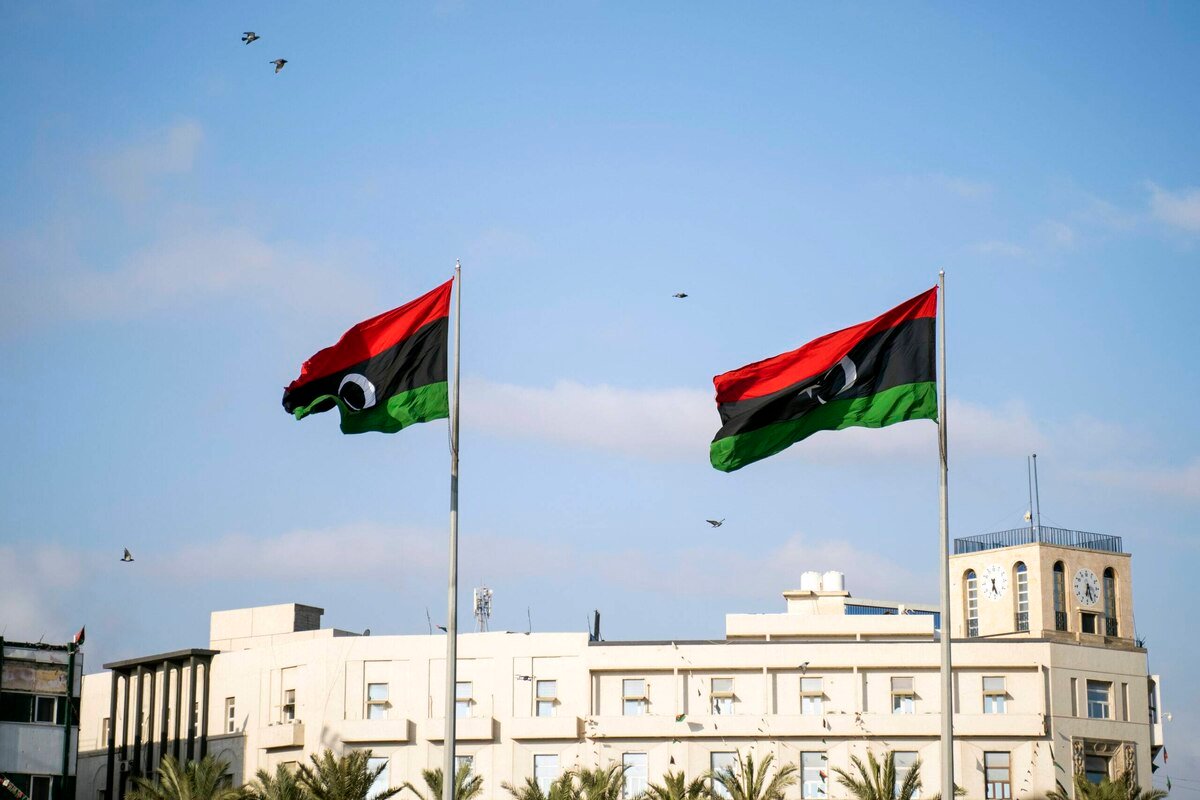

![Two Libyan flags at Martyrs square in Tripoli, Libya [Getty]](https://www.middleeastmonitor.com/wp-content/uploads/2025/11/photo_2024-05-16_11-38-37-1.jpg)
The Libyan political landscape, long defined by competing governments and institutional fragmentation, has recently delivered its most rent—and perhaps most confounding—invention yet: the Supreme Authority of the Presidencies (in Arabic, al-Hay’at al-‘Ulyā lil-Riyāsāt). Announced on 20 November 2025, in Tripoli, this body emerged from an agreement between the heads of the three most powerful western-based institutions—the Presidential Council (PC), the Government of National Unity (GNU), and the High Council of State (HCS). Its stated purpose is a “coordinating framework” intended to unify decision-making on strategic issues and break policy deadlocks. Yet, for many observers and rivals in the east, this is little more than jargon without any substance—a sophisticated smoke-and-mirrors mechanism designed not to solve Libya’s crisis, but to prolong […]

