



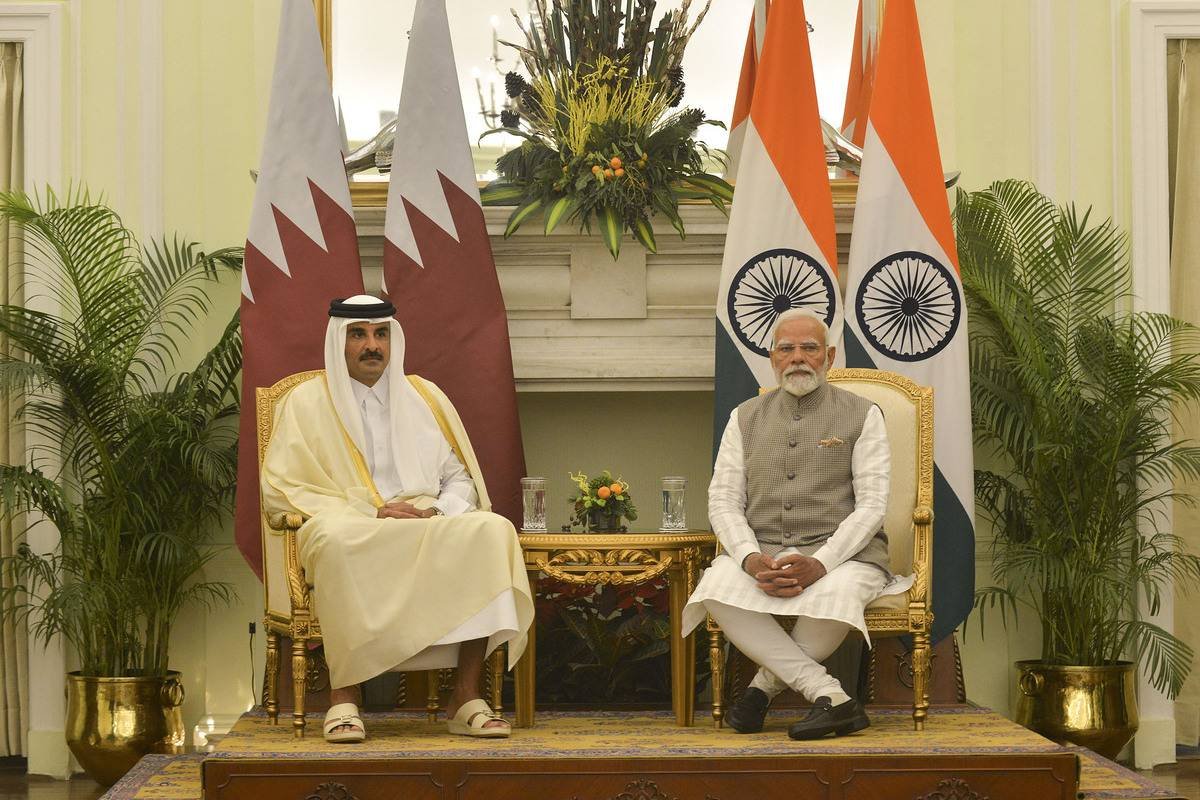

![Qatar's Amir Sheikh Tamim bin Hamad Al-Thani (L) and Indian Prime Minister Narendra Modi (R) preside over the signing of agreements at Hyderabad House in New Delhi, India, on 18 February 2025. [Imtiyaz Khan - Anadolu Agency]](https://www.middleeastmonitor.com/wp-content/uploads/2025/02/AA-20250218-37086765-37086761-NARENDRA_MODI_TAMIM_BIN_HAMAD_AL_THANI_MEETING_IN_INDIA.jpg)
For decades, India’s West Asia policy rested on three simple principles: equi-distance, non-prescriptive, and non-interference. These reflected New Delhi’s belief that its stakes in the region were too high to risk taking sides. The stakes speak for themselves—over nine million Indian workers live and work in the Gulf, sending home billions of dollars in remittances every year. New Delhi is also deeply engaged with the Gulf through energy, trade, investment flows, particularly from the petrodollar-rich monarchies. Therefore, a stable Gulf has always been central to India’s overall interest, including security and prosperity. This balance, however, began to shift after the Modi government came to power in 2014. New Delhi no longer held as tightly to its old principles. Instead, it […]

