

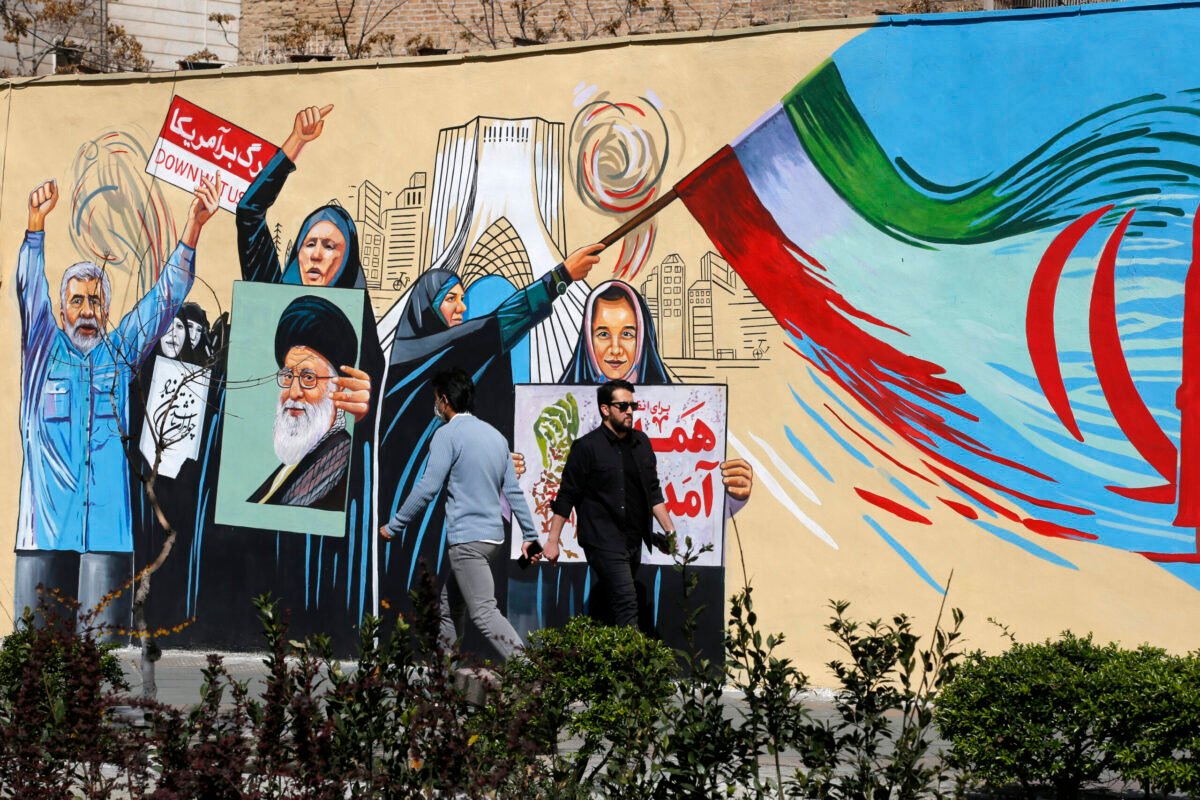
![Residents walk past colorful wall paintings as daily life continues under the shadow of destruction following the U.S. and Israeli attacks on Tehran, Iran, on April 5, 2026. [Fatemeh Bahrami - Anadolu Agency]](https://www.middleeastmonitor.com/wp-content/uploads/2026/04/AA-20260405-41023053-41023040-DAILY_LIFE_CONTINUES_IN_TEHRAN_UNDER_THE_SHADOW_OF_ATTACKS-scaled-e1775403639607.jpg)
The killing of Ayatollah Ali Khamenei in the opening phase of the US-Israeli war against Iran has generated a striking argument in strategic and theological circles alike: that the killing may have removed not merely a political leader but a normative brake on Iran’s possible march toward nuclear weapons. Reports indicate that Iranian decision-making has since hardened under intense military pressure and an increasingly securitised internal environment. What gives Khamenei’s death a particular doctrinal significance is that he had, over more than two decades, publicly framed weapons of mass destruction—including nuclear and chemical weapons—as contrary to Islam. If that position represented a genuine religious constraint rather than mere diplomatic rhetoric, then his death may have removed more than a leader: […]
